
 日本語
日本語 中文
中文 Deutsch
 Español
Robotic Soldering Process: Point, Drag, Laser, and Area Laser Methods

Robotic Soldering Process:
Point, Drag, Laser, and Area Laser Methods
Table of Contents
- What Is a Robotic Soldering Process?
- Point Soldering Process
- Drag Soldering Process
- Laser Soldering Process
- Area Laser Soldering Process
- Robotic Soldering Process Comparison
- Conclusion: Choosing the Right Automated Soldering Method
- Related Products & Services
- Video: Automated Soldering Methods

Video: Automated Soldering Methods
What Is a Robotic Soldering Process?
Steve Hello, I’m Steve, a Soldering Engineer at Japan Unix.
Robotic soldering is a controlled sequence that positions the heat source, applies heat, supplies solder, forms the joint, and allows it to cool under repeatable conditions. The correct method depends on joint geometry, thermal mass, required cycle time, access to the joint, and the level of process control and traceability required in mass production.
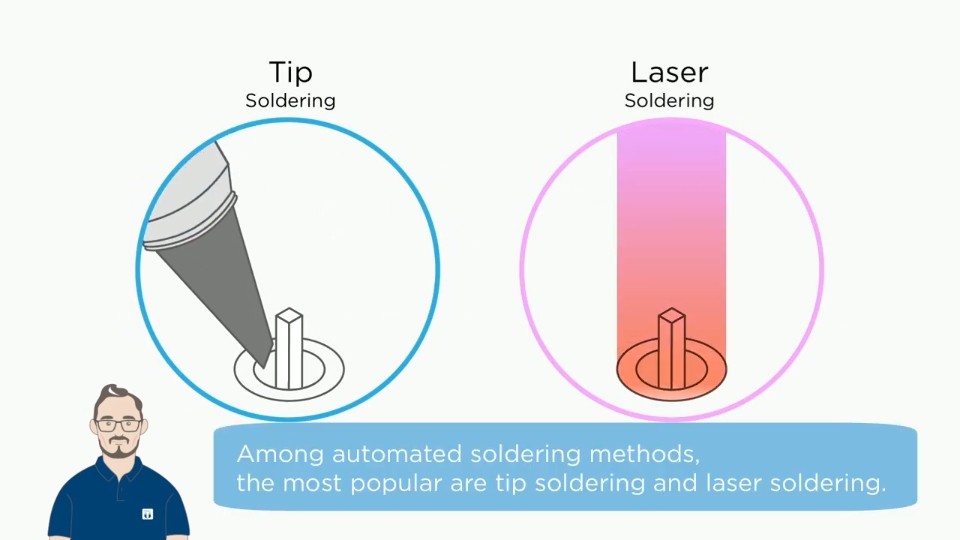
The four methods below are commonly used in automated soldering systems: point soldering, drag soldering, laser soldering, and area laser soldering.
Point Soldering Process
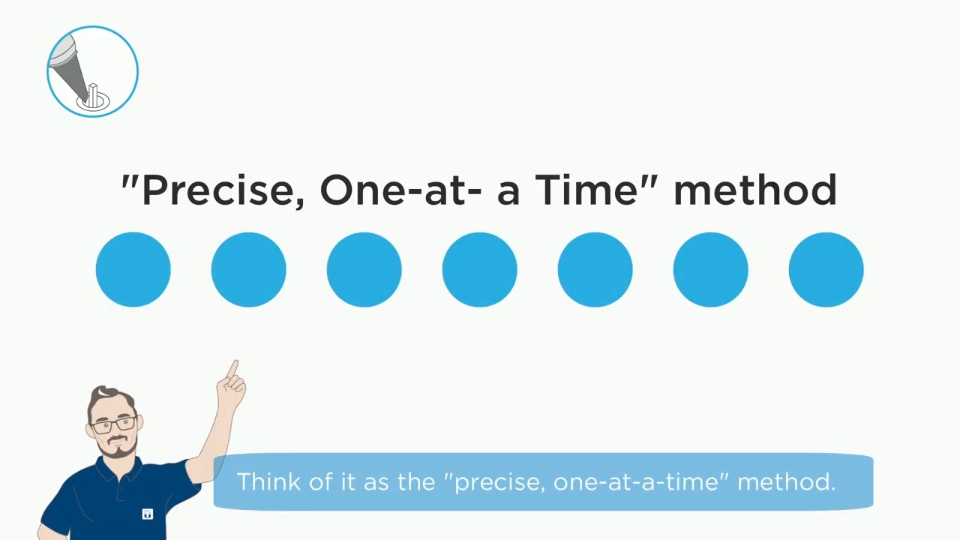
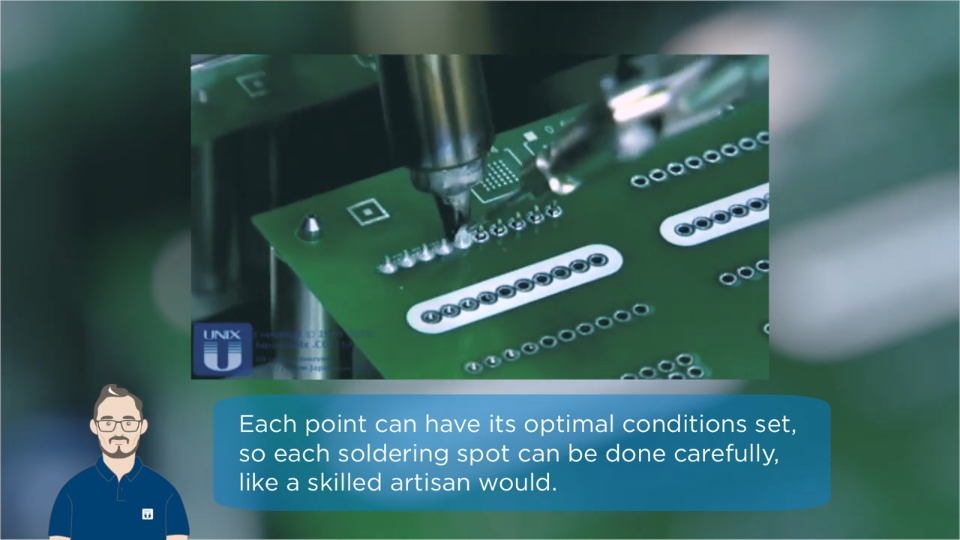
Point soldering uses a heated iron tip to form one joint at a time. The robot can apply different temperature, solder-feed, and dwell-time settings to individual joints, making this method suitable for assemblies with varied joint sizes or thermal requirements.
Process Steps
- The robot positions the iron tip and solder wire at the joint.
- The tip heats the terminal and pad.
- Solder wire is fed into the heated joint.
- Solder feeding stops and a short dwell period supports wetting.
- The tip retracts and the joint cools.
Point soldering offers flexible condition control for each joint. However, cycle time increases when many joints must be processed sequentially, and tip condition, access angle, and maintenance must be controlled.
Drag Soldering Process
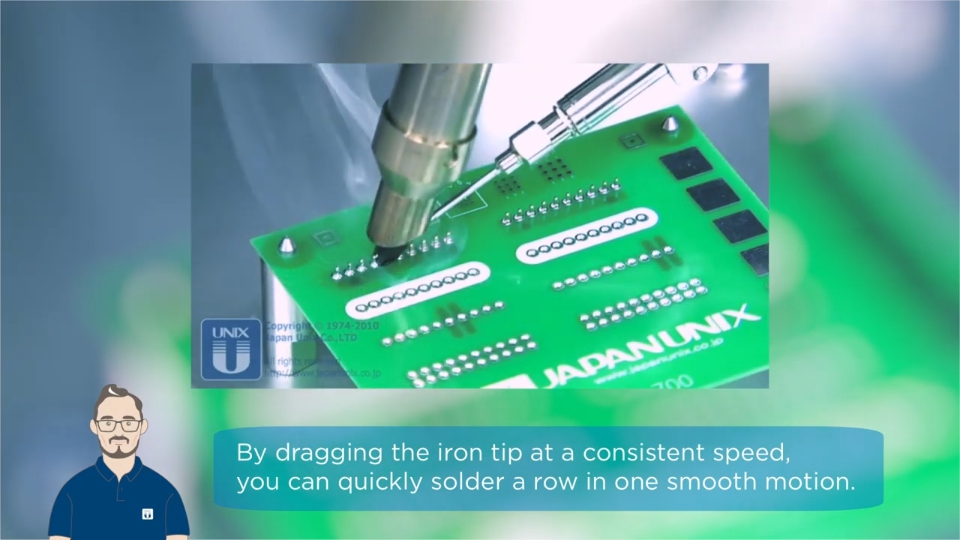
Drag soldering moves an iron tip continuously along a row of terminals while maintaining controlled heat, solder supply, speed, and contact. It can shorten cycle time when multiple aligned joints have similar geometry and thermal conditions.
Process Steps
- The robot positions the iron tip at the beginning of the terminal row.
- The first joint is preheated and solder is supplied.
- The tip moves along the row at a controlled speed.
- Solder feed, tip temperature, and contact conditions are maintained.
- The tip exits the final joint and the row is allowed to cool.
Drag soldering is effective for aligned terminals and repetitive joint patterns. Product geometry, bridging risk, tip shape, and consistent contact must be evaluated before mass production. Compare compatible configurations in the soldering robot lineup.
Laser Soldering Process
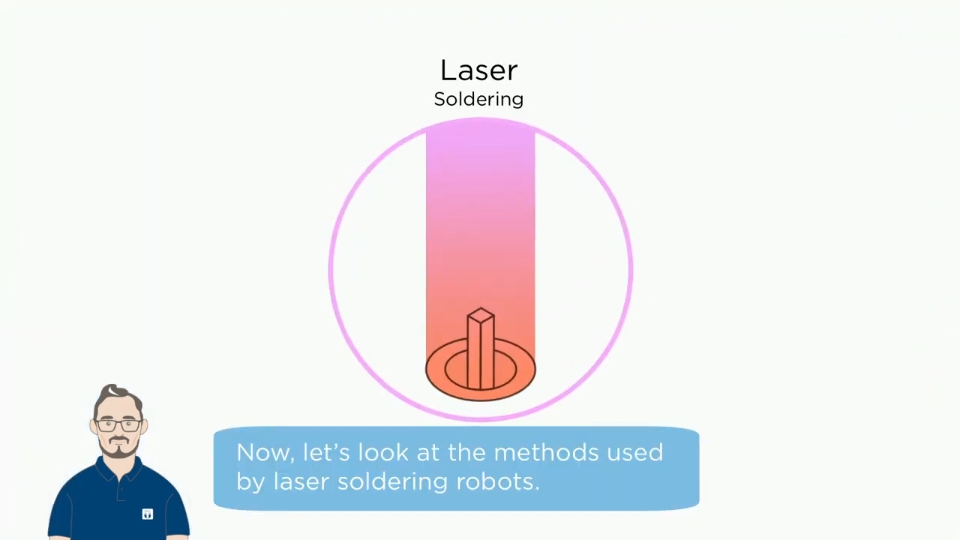
Laser soldering applies focused, non-contact energy to the joint. Because there is no iron-tip contact, the process avoids tip wear and can support repeatable heat input when joint geometry, materials, and process parameters are properly controlled.
A typical laser soldering sequence consists of preheating, solder supply, post-heating, and cooling. The required output, irradiation time, solder-feed timing, and temperature window must be validated for each application.
Laser soldering is suitable for selective heating, restricted-access joints, and applications where mechanical contact should be avoided. Surface absorption, reflections, shadowing, thermal mass, and process-window control remain important engineering considerations. Review the laser soldering principles for additional technical context.

Area Laser Soldering Process
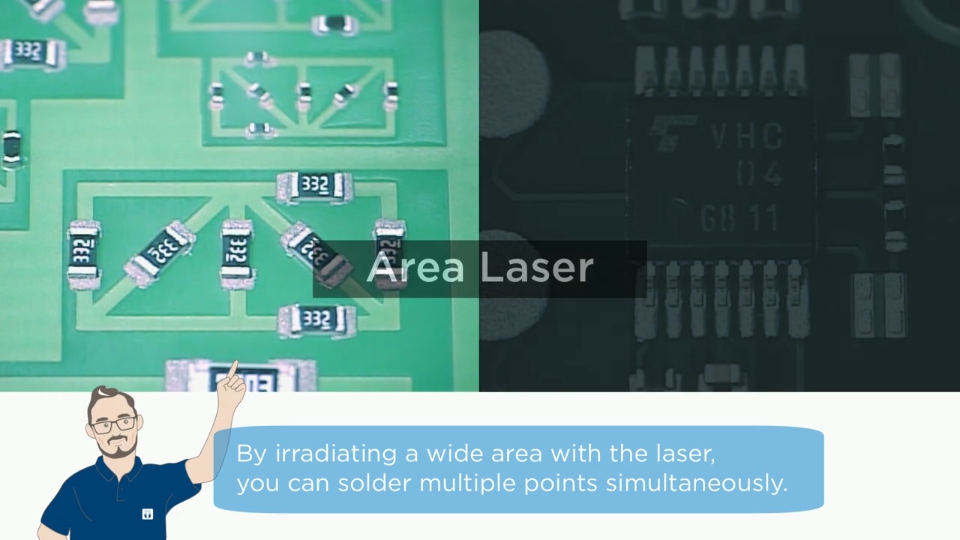
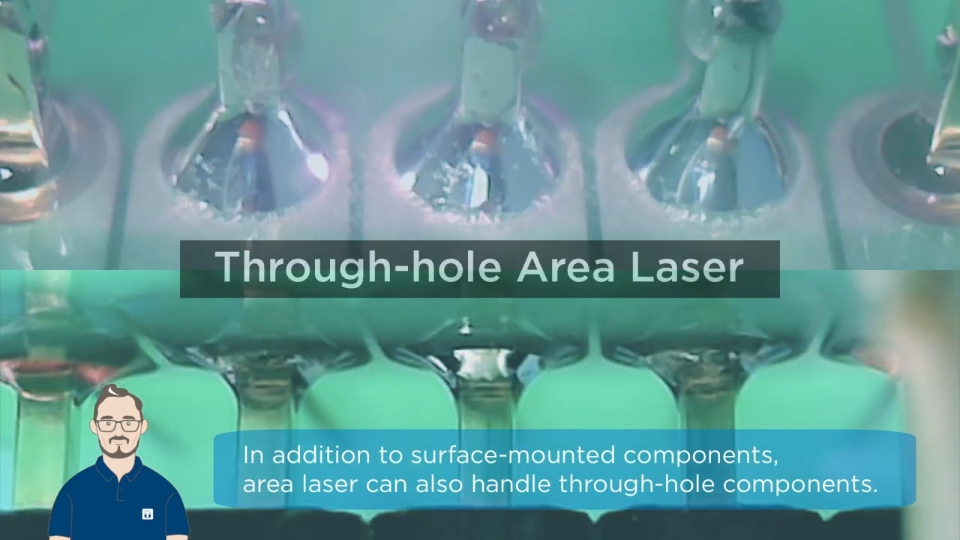
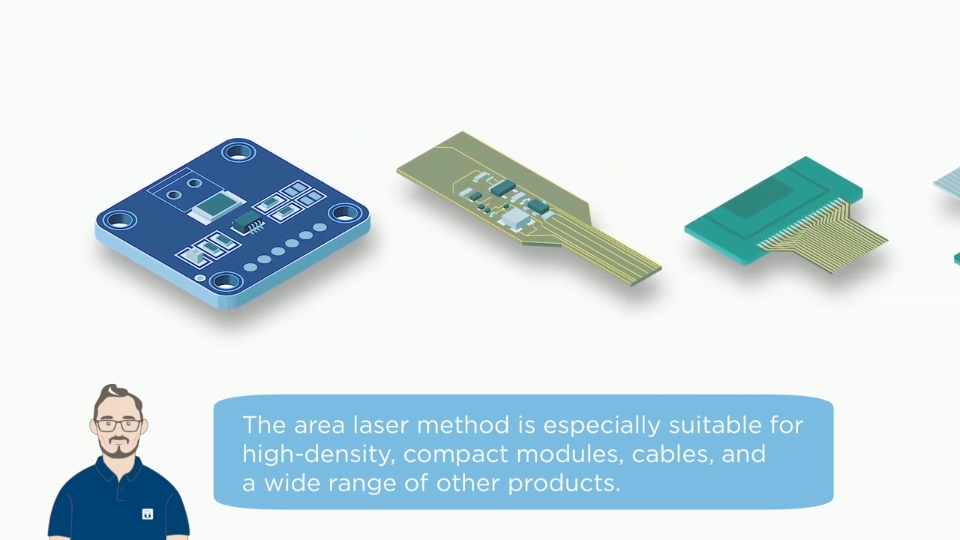
Area laser soldering expands the irradiated area so that multiple joints can be heated simultaneously. It can improve throughput for compact modules, connectors, cables, and assemblies with multiple joints that can be processed under a common thermal condition.
Process Steps
- The workpiece is positioned and the target area is aligned with the optical system.
- Solder material and joint conditions are prepared.
- Laser energy is applied across the defined area.
- The joints are held within the required heating window.
- Irradiation stops and the assembly cools before inspection.
Area laser soldering can reduce processing time by heating multiple points at once. Uniform heat distribution, fixturing, optical access, and differences in joint thermal mass must be confirmed through application testing. See the area laser soldering solution.

Robotic Soldering Process Comparison
| Method | Heat application | Primary advantage | Main limitation | Best-fit use |
|---|---|---|---|---|
| Point | Contact, one joint at a time | Individual condition control | Sequential cycle time and tip wear | Mixed joint sizes and varied conditions |
| Drag | Contact, continuous row | Faster processing of aligned terminals | Bridging and geometry constraints | Repetitive terminal rows |
| Laser | Non-contact, selective | No tip wear and localized heating | Optical and material-dependent process window | Restricted access and precision heating |
| Area laser | Non-contact, multiple joints | Simultaneous processing | Thermal uniformity and fixturing | Compact multi-joint assemblies |
Conclusion: Choosing the Right Automated Soldering Method
No single automated soldering method is best for every application. The correct choice depends on joint design, production volume, required cycle time, quality criteria, maintenance requirements, and the data needed for process control and traceability.
Japan Unix evaluates actual components and production requirements before selecting the soldering method, robot configuration, and process parameters. For applications where the process window is uncertain, testing with the actual workpiece is the safest way to confirm feasibility before equipment specifications are finalized. Use our soldering test request service to discuss an application.


Related Products & Services
Video: Automated Soldering Methods